XR-IT
 5+
5+
 October 2024 - present
 Unreal Engine, Unity
Overview
XR-IT (eXtended Realities Intraverse Toolkit) is a research system developed at DAE (Design Academy Eindhoven)'s Trans Realities Lab under Professor Dr. Ian Biscoe. It connects geographically separated production and education spaces into a shared virtual or mixed reality environment using motion capture, video, game engines, and other film-grade infrastructure.
The project is funded through EMIL as part of the EU's Horizon Europe programme. It is being developed toward shared XR spaces for universities and partner labs, including Aalto University and Filmakademie Baden-Wuerttemberg.
The system was tested through Cat Content, a distributed virtual production with actors in Eindhoven and Helsinki working with a crew of about 20 people. Trans Realities Lab won the International Production Award at Next Reality Festival 2025 for the XR-IT-powered production.
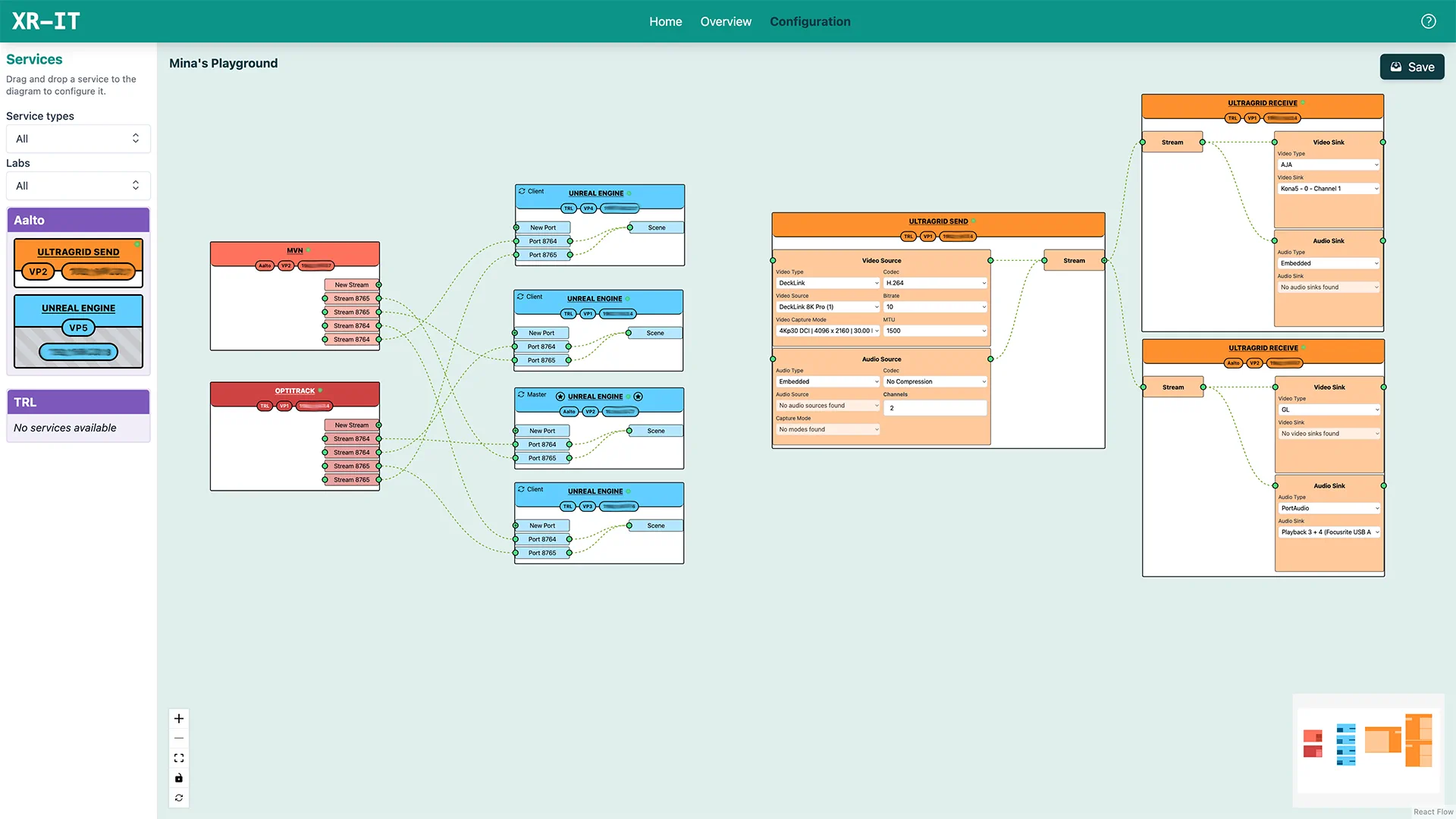
XR-IT System Connections Graph
My Contribution
I was responsible for the Unreal Engine and Unity plugin layers. My work focused on WebSocket-based communication with the Node.js backend built by a coworker, live-data ingestion inside the engines, and usable controls for non-technical teams to operate shared XR sessions.
During the test production, I supported the live setup on site: checking that the engine plugins synchronized correctly, improving production issues as they appeared, and documenting follow-up work from the shoot.
After the production, I continued improving the engine-side systems, writing documentation, preparing XR-IT for public release, and supporting student projects that use the toolkit for cross-spatial collaboration.
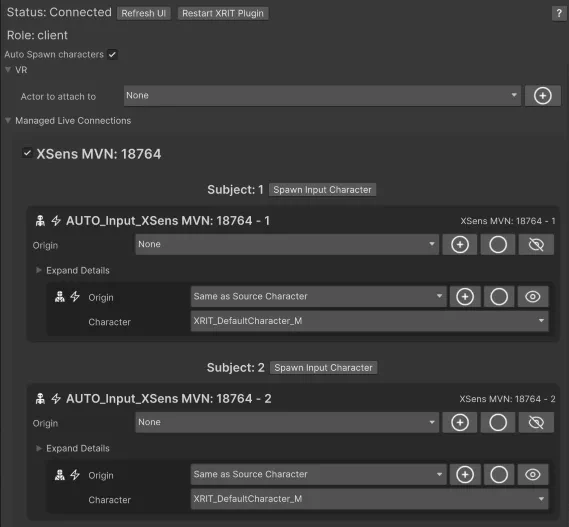
XR-IT Unity Plugin UI
The Tech
The Unreal Engine plugin was the primary production target because it powered the test film setup. I built the engine-side functionality in C++ and Blueprints.
The plugin exchanges state over WebSockets, integrates optional motion-capture sources such as Xsens MVN and OptiTrack, and works alongside native Unreal Engine media-output streaming plugins. It synchronizes actor calibration, selected characters, opened scenes, virtual-origin alignment, and custom engine-to-engine data streams.
The Blueprint layer exposes the workflow to production users and connects to systems such as Animation Retargeting and project-specific user classes in Unreal.
I also built an editor UI for controlling the plugin, including character swapping and calibration between virtual-space characters and real-world origin points.
The Unity plugin mirrors the core synchronization and calibration workflow, excluding media streaming features that are specific to the Unreal Engine production setup.
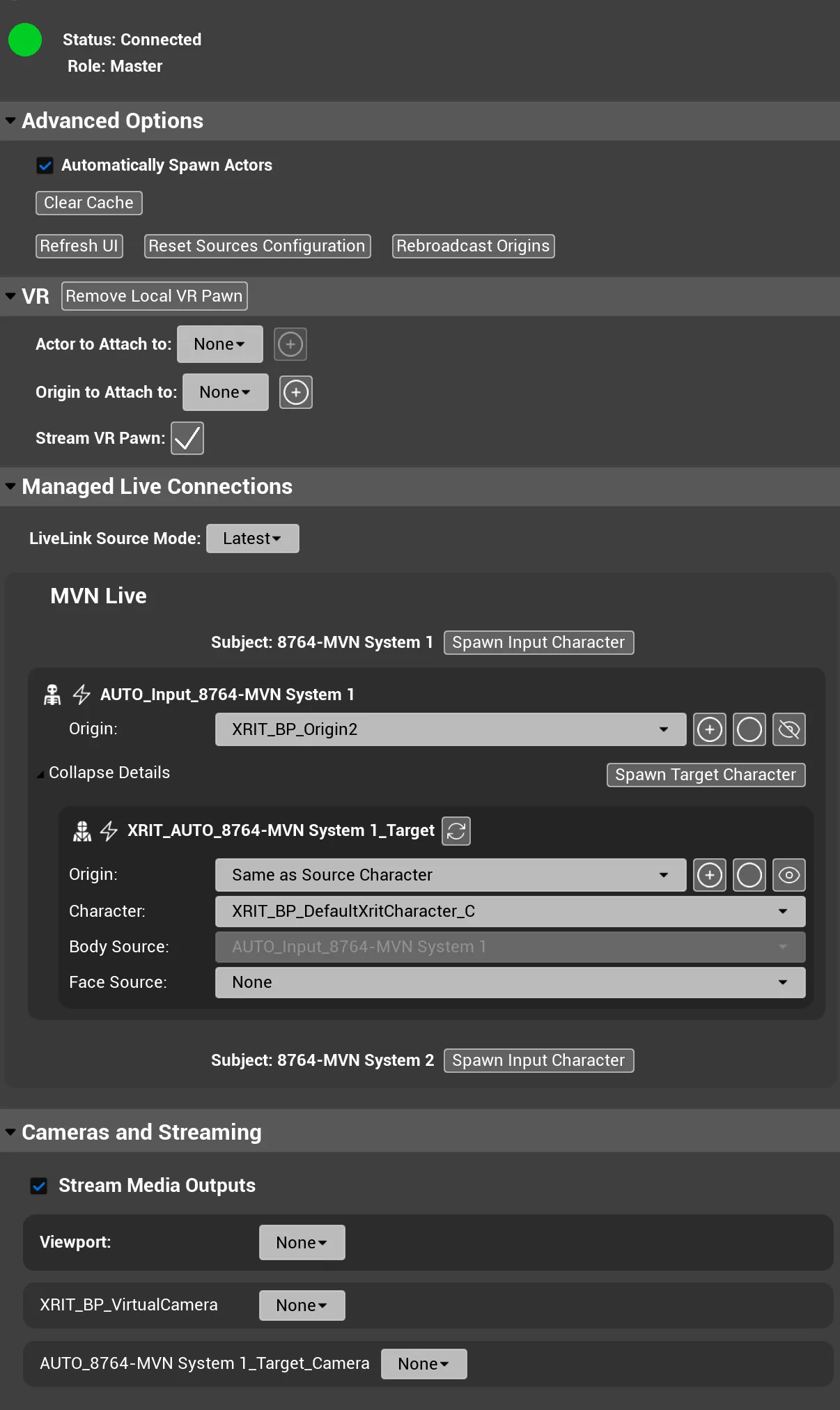
XR-IT Unreal Engine Plugin UI